
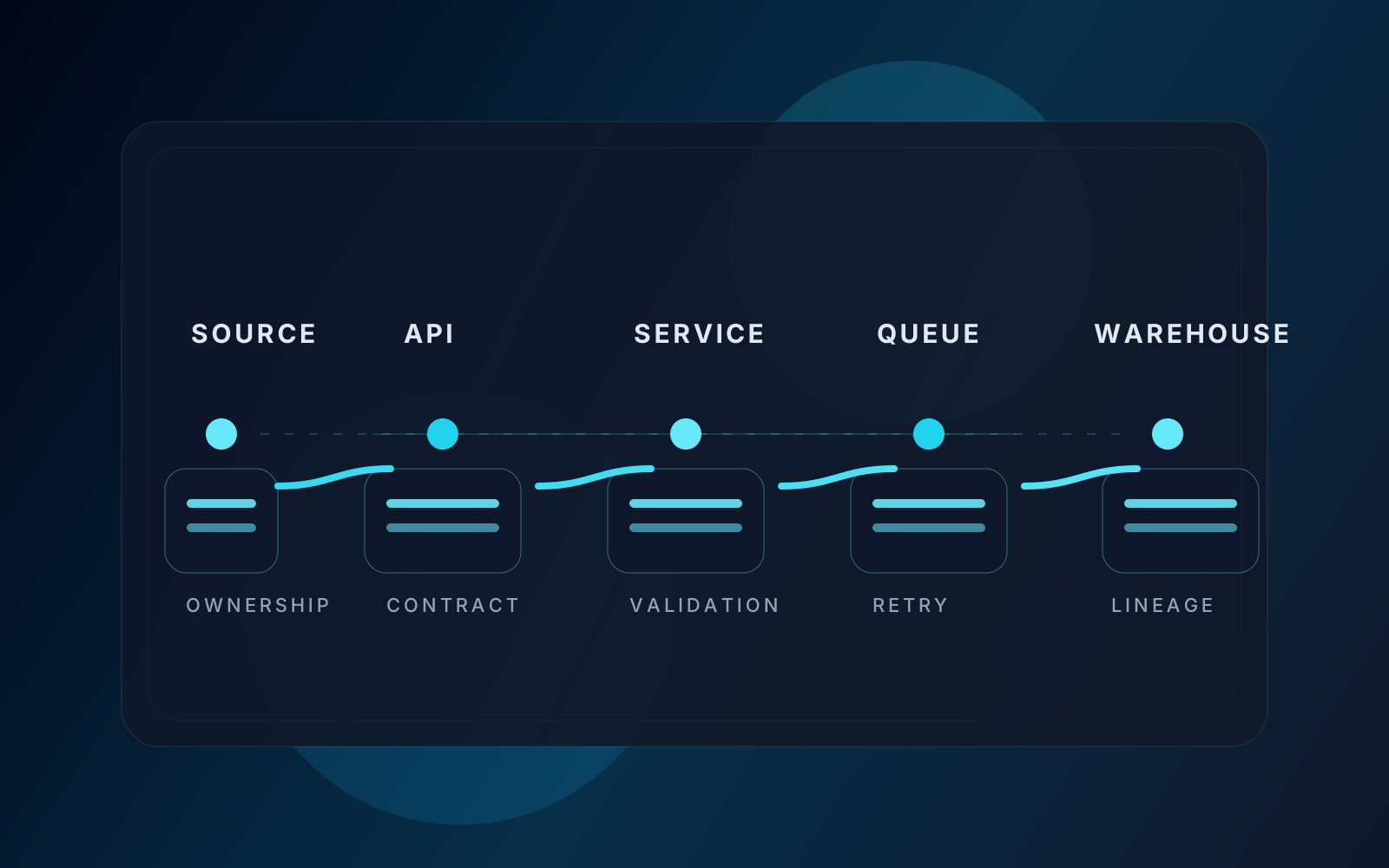
Integration is often described as plumbing, but that comparison hides the most important work. The real task is deciding which system owns which fact, which values may change, and what must remain stable when data crosses a boundary. A clean interface does not merely transport information; it preserves meaning.
The strongest contracts are narrow and explicit. They define field names, optional values, validation rules, error handling, and what happens when the same message arrives twice. If a team cannot describe the contract in plain language, the contract is probably too vague to support dependable automation.
Good integration also respects failure as a normal event rather than an exception. Delays, retries, duplicate events, and partial outages should be expected and instrumented. Correlation identifiers, structured logs, dead-letter queues, and idempotent writes make the system easier to reason about when the happy path is no longer available.
The useful test is simple: does the integration reduce human correction work? If people still export spreadsheets, repair records, and reconcile totals by hand, the system may have moved information around, but it has not yet solved the operational problem.