
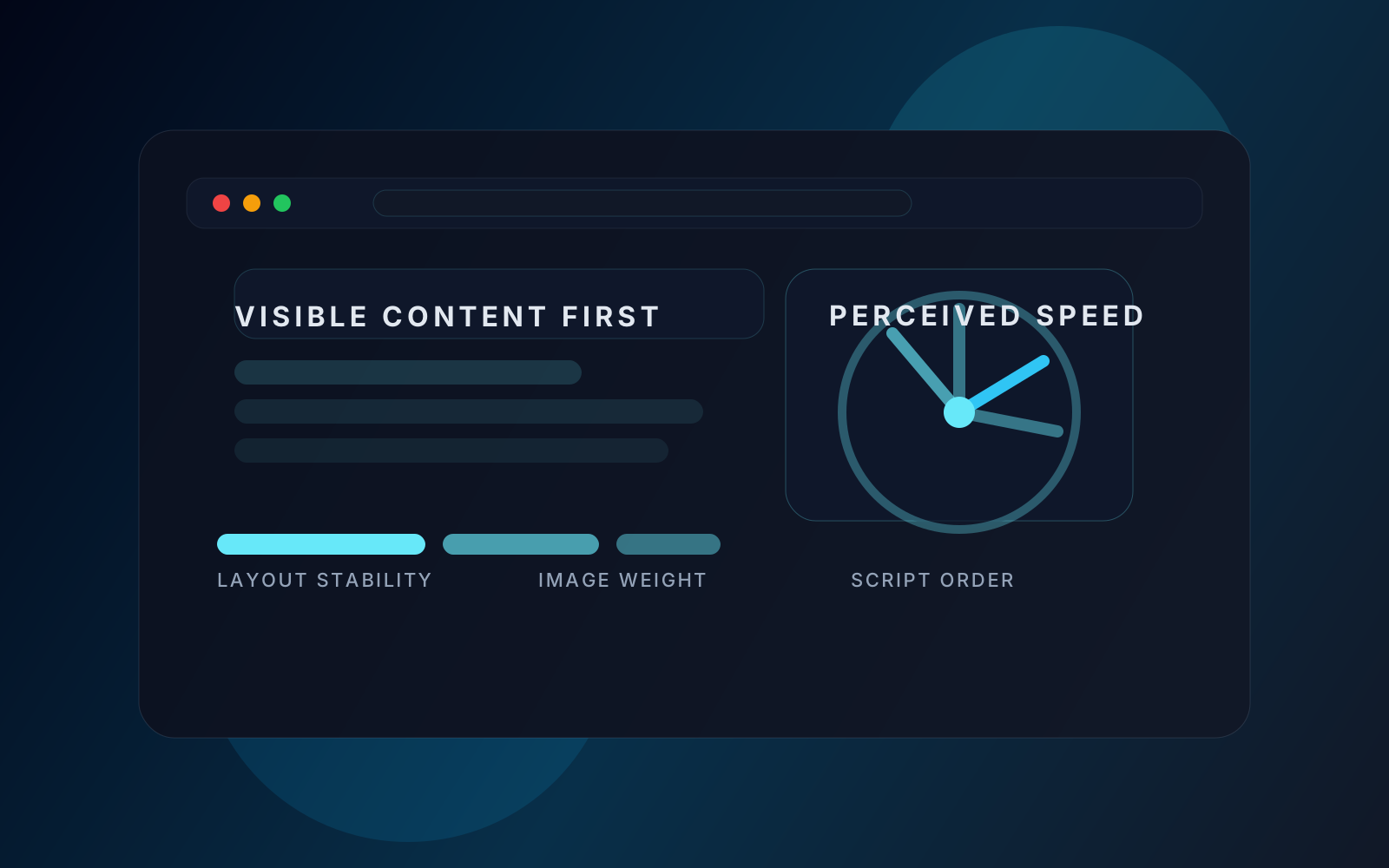
Speed is not only a matter of milliseconds. Visitors judge a page in layers: first by whether something appears, then by whether it looks stable, and finally by whether the page answers the question they brought with them. A page can be technically quick and still feel slow if the layout jumps around or if the important content arrives too late.
That is why structure matters as much as optimization. The first paint should contain the useful headline, the right navigation cues, and a visual hierarchy that helps the eye land where it should. Large images, complex scripts, and decorative motion all have a place, but they should serve the reading experience rather than delay it.
There is also a psychological dimension to speed. People trust a page sooner when they can see the page is complete enough to use, even if secondary content is still loading in the background. Clear spacing, predictable controls, and responsive layout give the impression of quality because they reduce the amount of effort required to understand the page.
A fast site is therefore not simply a compressed site. It is a site that respects the order in which people learn, decide, and act. That distinction is easy to miss when teams focus only on performance metrics, but it is usually the difference between a page that measures well and a page that actually feels good to use.