
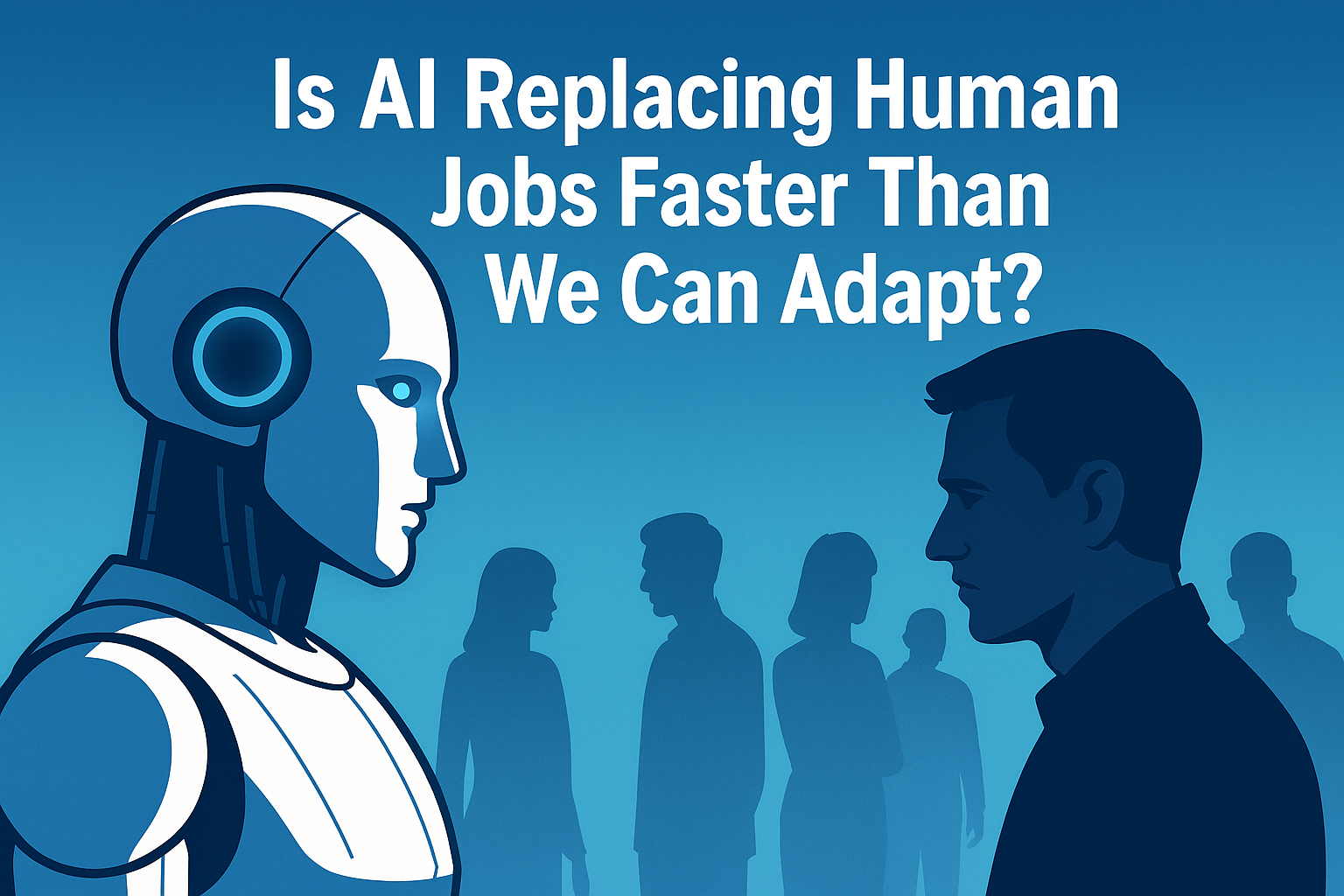
The Growing Fear Around AI and Job Loss
Artificial intelligence has rapidly moved from a futuristic concept to an everyday business tool, but with its rise comes a controversial question: are humans being replaced faster than they can adapt? Across industries like customer service, manufacturing, and even software development, AI systems are already performing tasks that once required skilled professionals. This shift has sparked concern among workers who fear that automation is not just assisting jobs—but eliminating them altogether.
While some experts argue that every technological revolution creates new opportunities, others believe this wave of AI is fundamentally different. Unlike past innovations, artificial intelligence is capable of learning, adapting, and improving without direct human input. This has led to a growing perception that no job is truly “safe,” especially as companies look to cut costs and improve efficiency at scale.
The Business Perspective: Efficiency vs. Responsibility
From a business standpoint, the appeal of AI is undeniable. Automation reduces labor costs, minimizes human error, and allows operations to run around the clock. For small and mid-sized businesses, adopting AI can mean the difference between surviving and falling behind competitors. However, this efficiency comes with a moral and strategic dilemma: should companies prioritize profits over workforce stability?
Many organizations are now walking a fine line between innovation and responsibility. Some are investing in retraining programs to help employees transition into new roles, while others are aggressively automating without offering a clear path forward for displaced workers. This divide is fueling public debate and shaping how customers perceive brands—especially those seen as replacing humans with machines too quickly.
Adaptation or Disruption: What Happens Next?
The reality is that AI is not going away—in fact, it is accelerating. The key question is whether society and businesses can adapt quickly enough to keep up. New roles are emerging in AI management, data analysis, and system integration, but they often require entirely different skill sets than the jobs being replaced. This creates a growing gap between available opportunities and worker readiness.
For business owners, the smartest approach may not be full automation, but strategic integration. Combining human expertise with AI capabilities can lead to stronger outcomes without completely removing the human element. Companies that strike this balance are more likely to build sustainable growth while maintaining trust with employees and customers alike.
As the debate continues, one thing is clear: AI is reshaping the workforce in real time. Whether this transformation leads to greater opportunity or widespread disruption depends on how businesses, workers, and society respond to one of the most significant technological shifts in history.